Sponsored by


Good morning, {{first_name}}! This week we're covering how integration is the hardest part on add-on investments, direct lending broadening out, Fairfax bet on India’s Banking, and the FED reprising PE.
Want to advertise in PE 150? Check out our ad platform, here.
Know someone who would love this? Pass it along—they’ll thank you later! Here’s the link.

MICROSURVEY
The Hard Part Starts After the Deal Closes
Add ons may look compelling in the investment committee memo. Integration is where the thesis gets tested.
In our latest PE150 survey, 39% of respondents named operational process integration as the biggest challenge when executing add on acquisitions. Another 34% pointed to systems and technology integration, while just 27% cited management bandwidth.

The results suggest the primary constraint is not finding enough executives to oversee the deal. It is getting two businesses to actually operate as one.
That distinction matters for sponsors pursuing consolidation strategies. Add ons can create scale quickly, but value creation depends on whether workflows, systems, and operating processes can keep pace with acquisition volume. A platform that completes five acquisitions without integrating them may have more revenue, but not necessarily a better business.
For GPs, the implication is simple: integration capability deserves as much diligence as the next target. (More)

PRIVATE CREDIT CORNER
Direct Lending Is Moving Beyond Tech
Direct lending is broadening out. Healthcare remains the largest sector by deal count at roughly 18%, while Services and Leasing sits near 17%. But the more interesting shift is happening further down the table.
Technology has fallen from roughly 18% in 2025 to around 16% in 2026 YTD, while Building Materials, Utilities, Chemicals, Automotive, and Food and Beverage have all gained share. Manufacturing and Machinery has also moved higher.

That matters because private credit growth is becoming less dependent on the sectors that dominated the last cycle. Lenders are finding more opportunities in asset heavy and traditional industries, where financing needs can be larger and collateral more tangible.
For sponsors, a broader lending universe could make financing available across a wider set of acquisition targets. For lenders, it raises a different challenge: growth now requires underwriting businesses with more cyclicality and operational exposure.
The opportunity set is widening. So is the underwriting job. (More)
A CRM so smart, it updates itself.

HubSpot's CRM is so smart, it now updates itself. Calls get logged and summarized the moment they end. New leads get researched and a first outreach drafted, automatically. Deals move forward on their own, with next steps flagged before you have to ask.
Even the one repetitive task you've been meaning to fix can now run itself, no code required. Customers using it are already seeing the difference.
This isn't the CRM you have to work hard to figure out. It's the one already working before you log in.
DEAL OF THE WEEK
Fairfax Makes a $5.6B Bet on India’s Banking Boom
Prem Watsa’s Fairfax Financial is acquiring a 60.7% stake in IDBI Bank for roughly $5.6 billion, giving the Canadian investor control of a lender with $46.7 billion in assets and more than 2,000 branches. The transaction is set to become India’s largest cross border bank deal.

The timing matters. IDBI’s gross bad loan ratio has fallen to 2.3%, from nearly 32% in 2018, meaning Fairfax is buying after a major balance sheet cleanup rather than funding the rescue itself. India’s government and LIC will retain a combined 34% stake, preserving public exposure while handing operating control to private capital.
For private equity, the bigger signal is India’s financial services opening. Foreign capital is increasingly targeting banks, lenders, and brokerage platforms as credit demand grows and asset quality improves.
Why it matters: Fairfax is not buying a turnaround story. It is buying into the next phase of India’s credit expansion, with scale already attached. (More)

HEADLINE OF THE WEEK
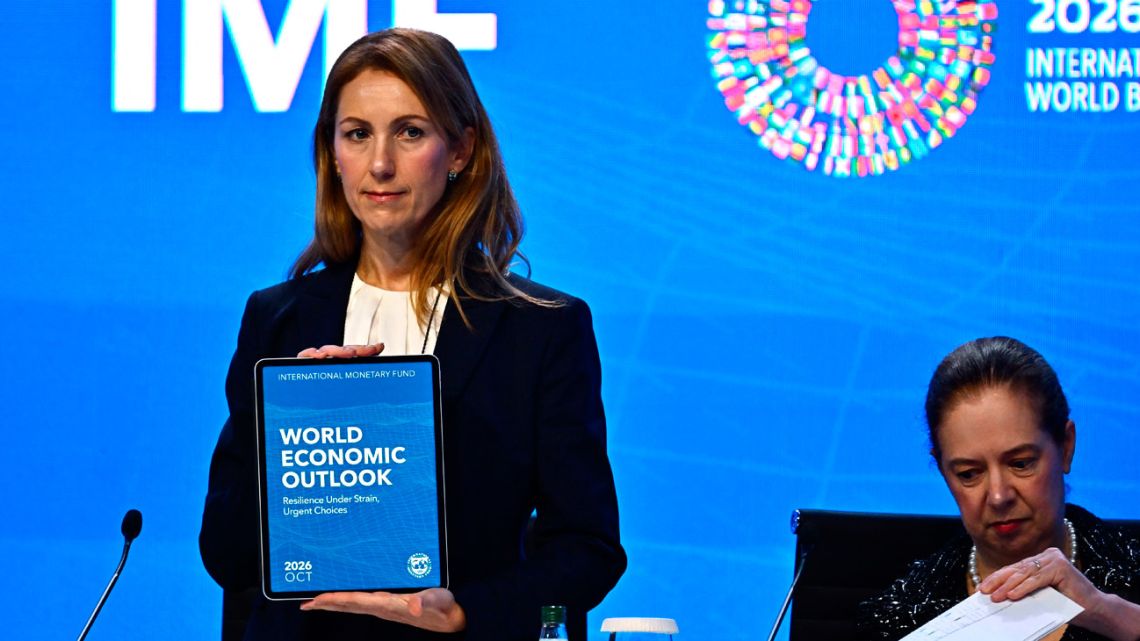
Hot U.S. Inflation : Higher-for-Longer Rates Reprice Private Equity
So What? Renewed Fed tightening risk keeps debt expensive and valuation gaps wider, meaning sponsors may need to underwrite lower leverage, longer holding periods and more operational value creation rather than relying on multiple expansion or near-term refinancing.
For context, this matters disproportionately for PE because the Fed already raised its policy range to 3.75%–4.00% in September, and policymakers are now debating whether inflation is persistent enough to justify another move. (More)
IMPORTANT DEALS THIS WEEK
Ithaca Holdings → Bumble | ~$1.3B
Ithaca, a newly formed tech holding company, agreed to take Bumble private for $6.05 a share in cash, a 138% premium. Blackstone and Whitney Wolfe Herd approved the deal by written consent. Read more
Atlantic Ridge + Grafine → Paragon Films, from Rhône | ~$900M
This is the first investment for the newly launched Atlantic Ridge, and one of the largest debut deals ever by a new PE firm. Paragon makes stretch film. Expected to close in Q4 2026. Read more
L Catterton + Altas Partners → Fullscript (majority), from HGGC & Snapdragon | Undisclosed
This is a sponsor-to-sponsor deal for a whole-person-care platform that serves practitioners. Expected to close in Q4. Read more
Emergence → Clinect Healthcare | Undisclosed
The PE firm bought Clinect, a patient-experience survey and reputation software company, to build AI-driven outcomes intelligence. Read more
INTERESTING ARTICLES